
Web Application Development
We build secure, browser-based applications such as portals, dashboards and booking systems, designed around your workflows and ready to grow with your business.
We build progressive web apps that install from the browser, load quickly, keep working on poor connections and give users an app-like experience from a single codebase.
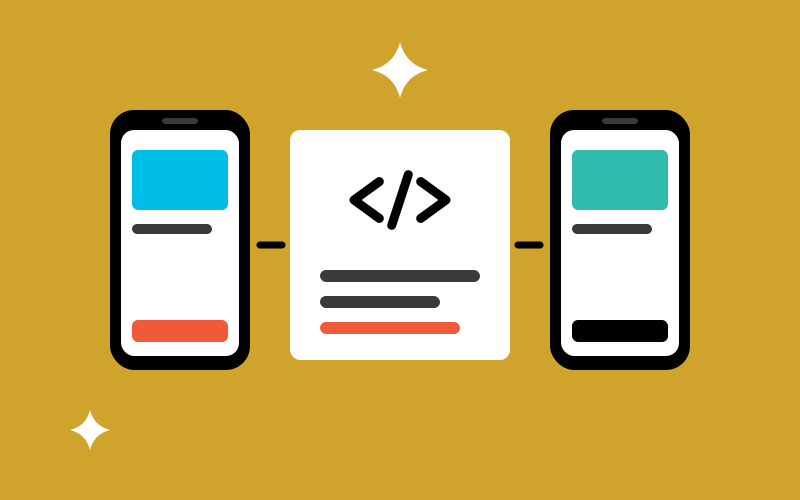
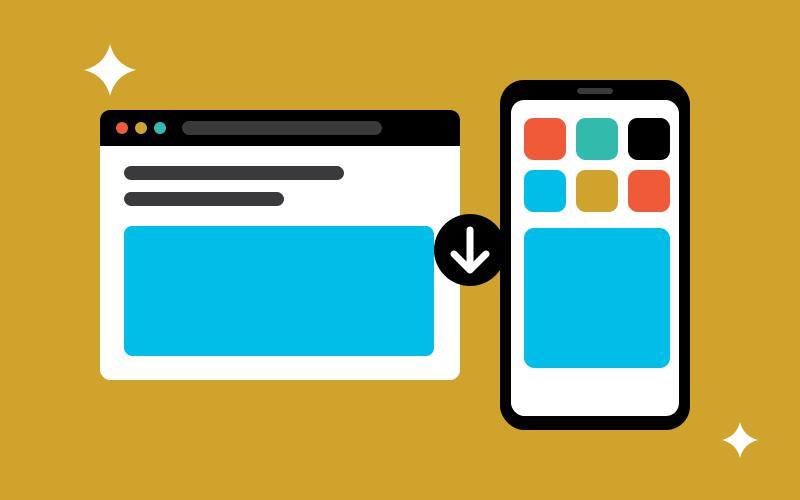
Progressive web app development is the building of web applications that behave like installed apps. A PWA runs in the browser but can be added to a phone's home screen, open full-screen, load quickly, keep working when the connection drops and, on supported devices, send notifications. At TechBiz Digital, we develop PWAs for businesses that want to reach users across devices from a single codebase, without requiring an app store download.
The approach suits many use cases, but not all. We give a clear recommendation based on your requirements, and if a native experience is the better route, our mobile app development service can help instead.
where asking people to download an app creates unnecessary friction.
that must keep working in places with poor connectivity, such as warehouses or construction sites.
that need to be fast on mobile and also discoverable through search.
that need to run on a mix of phones, tablets and computers without managing separate apps.
where you want to test an idea on mobile before investing in native development.
who need fast loading and access to key screens offline.
a web app manifest and icons so users can add the app to their home screen and launch it like a native app.
background scripts that cache key resources, enable offline access and speed up repeat visits.
clear behaviour when the connection drops, including queued actions that sync later where appropriate.
layouts and controls designed for mobile use, based on mobile app UI/UX design principles.
where supported by the user's device and browser, and only with their permission.
fast initial loads and smooth interactions, even on mid-range phones.
HTTPS, secure authentication and careful handling of locally stored data.
tracking of installs, usage and key actions to understand how people use the app.
checks across the main browsers and devices, including iPhone and Android, before launch.
We list the features you need, check them against current browser and operating system support, and confirm whether a PWA is right.
We decide which content and actions work offline, how data synchronises and how the app shows connection status.
We develop the app, service workers and manifest to the same engineering standards as our web application development.
We test installation, offline behaviour, push notifications and overall performance on a wide range of real devices and browsers.
We deploy the PWA, monitor usage and release updates that reach every user directly, without waiting for app store approval.
A single codebase for every platform reduces the cost of building and maintaining separate apps, and updates reach every user immediately. Because a PWA is accessed through a link, there is less friction for new users: they can try it straight away and install it once they find it useful. Content remains visible to search engines, which supports discovery in a way native apps cannot.
The trade-offs are real, and we are open about them. Where a PWA can meet your users' needs, it often delivers a strong experience at a lower total cost.
PWAs share one codebase across platforms and update instantly for every user, which lowers development and maintenance costs. They are discoverable through search and links, and they avoid app store review delays. Native apps, however, offer deeper access to device features, generally smoother performance for demanding interfaces and the visibility of an app store listing. Support for PWA features also differs between operating systems and browsers, with iOS more restrictive in some areas. We map your required features against current platform support before you commit.
PWAs can store information on the user's device to work offline, which needs careful handling. We decide what data is cached, how long it is kept and how it is protected, and we avoid storing sensitive information locally unless there is a clear need and suitable safeguards. When users sign out, cached personal data is cleared. Planning this early keeps the offline experience useful without creating unnecessary risk for your users or your business.
PWAs build on strong web foundations. Our website development service can modernise an existing site first, while cloud deployment and DevOps supports reliable hosting and release pipelines. If you later need a native app as well, mobile app development can reuse much of the product thinking. Explore all of our development services.
Frequently Asked Questions
A progressive web app, or PWA, is a website built with modern web technologies so it behaves more like an app. Users can install it on their home screen, it can work offline or on weak connections, and it can support features such as notifications, depending on the device and browser.
Sometimes. A PWA can be a cost-effective alternative when your app mainly displays information, handles forms or supports transactions. If you need deep access to device hardware, the best possible performance or a strong app store presence, a native or cross-platform app may be more suitable.
Yes, PWAs can be installed and used on iPhones and iPads, but some capabilities are more limited or work differently than on Android. We check the features you need against current support on each platform before recommending a PWA.
In some cases, PWAs can be packaged for app stores, particularly on Android. Store policies and requirements change, so we review the current options if a store listing matters to you.
Often, yes. We can add installability, offline support and performance improvements to an existing site, provided its structure and technology allow it. We assess your current site first and explain what is realistic.
Because a PWA is still a website, its content can be found by search engines in the same way, unlike content locked inside a native app. Performance improvements can also support a better page experience.
A PWA works in the browser but can be installed on a phone's home screen, load quickly, work with limited or no connection and send notifications where supported. One codebase serves every device without separate app store builds.
Yes, to a degree you choose. Using service workers, a PWA can cache pages and data so key screens open without a connection and changes sync when the device is back online.
It depends on the features, offline requirements, integrations and whether you are converting an existing website or building from scratch. We provide a proposal once we understand what the app must do.
Yes, on browsers and devices that support web push, including recent versions of iOS for installed web apps. We check support for your audience's devices and design notifications that users opt into.
Keep Exploring
More development services from TechBiz Digital, starting with those that work best alongside Progressive Web App Development.
We build secure, browser-based applications such as portals, dashboards and booking systems, designed around your workflows and ready to grow with your business.
We plan, build and launch mobile apps for iOS and Android, choosing native or cross-platform development based on what your product and users genuinely need.
We build fast, secure and accessible business websites on the platform that suits you, with content management your team can use and foundations ready for search.
We set up and manage the cloud infrastructure behind websites and applications, with automated releases, monitoring, backups and security that keep everything running reliably.
We build custom WordPress websites that are fast, secure and easy to manage, with tailored themes, editor-friendly blocks and only the plugins your site genuinely needs.
We build and customise Shopify stores that reflect your brand, are simple to manage and connect to the apps and systems your business runs on.
We help businesses choose the right e-commerce platform and build online stores that handle products, payments, shipping and integrations reliably as sales grow.
We build fast, focused landing pages for campaigns and launches, with clear messaging, reliable forms and accurate tracking so you can measure every enquiry.
We build iPhone and iPad apps that feel at home on Apple devices, with the development approach chosen after a technical assessment and every release prepared carefully for App Store review.
We build Android apps that run reliably across the wide range of Android devices, with the development approach chosen after a technical assessment and releases prepared for Google Play.
We design and build software around the way your business actually works, automating manual processes, connecting disconnected tools and giving teams one reliable system.
We help founders and businesses build software-as-a-service products, from a focused first version to a secure, scalable platform with subscriptions and customer accounts.
We design and build secure, well-documented APIs and connect the systems your business relies on, so data moves automatically between your website, apps and tools.
We build the secure, reliable server-side systems behind websites, apps and platforms, handling business logic, data, authentication and performance out of sight.
We design and build databases that keep business data accurate, fast and secure, from new data models to migrations, performance tuning and reliable backup strategies.
We build practical AI applications and features, from document search and summarisation to content and classification tools, designed with evaluation, privacy and human oversight.
We design and build automated workflows and AI agents that carry out multi-step tasks across your business tools, with clear permissions, approval steps and a record of every action.
We build AI chatbots for your website and messaging channels that answer questions from your approved content, capture enquiries and hand over to your team when a person is needed.
We keep websites secure, fast and up to date with regular updates, backups, monitoring, fixes and content changes, so your site keeps working while you run your business.